


“Fiction can reveal to us the truth of our life at a symbolic level, which is hugely important because human beings are symbolic animals,” said Irish novelist Paul Lynch, winner of the 2023 Booker Prize for his fifth novel, Prophet Song, a stunning portrayal of the ease with which liberal democracies can backslide into authoritarianism.

Lynch, who was in discussion with the literary and culture editor of Open Magazine, Nandini Nair, at a panel discussion titled ‘Prophet Song: Chaos in a Modern World’, was one of six Booker Prize winners and nominees at the eighth edition of the Kerala Literature Festival. At the four-day festival — with its 380 sessions, 600 speakers and over six lakh participants — fiction became a conduit to explore some of the most pressing issues of today, from war, migration, loss, and belonging to race, gender, and Donald Trump. The role of stories in shaping our world, especially given how imperilled it is at the current moment, was also discussed by all the Booker celebrities within the large, packed marquees erected on the tawny sands of Kozhikode beach.

Paul Lynch
Trump’s in the tent
At a moment when fear is in the air with several governments around the world, including the one headed by Trump, the newly-elected President of the United States, coming down hard on undocumented immigrants, questions around migration cropped up repeatedly in these conversations. Lynch, for instance, spoke about the refugee crisis and how leaving behind home is hard, even when it’s inevitable, since our identities are so complex. It is only “when there is nothing left… when you become dehumanised [that] you leave,” he said.
Journalist Shobha Warrier asked Ivorian author and journalist GauZ’ what he thought about the kind of backlash against migrants all over the world and its impact on diversity in a conversation titled ‘Standing Heavy: Immigrant Lives, Migrant Expectations.’ “We are all migrants,” he responded with a laugh. GauZ’s novel Standing Heavy, a satirical commentary on the legacy of colonisation and capitalist consumption, was shortlisted for the 2023 International Booker Prize. “Every human. Homo sapiens come from Africa.”
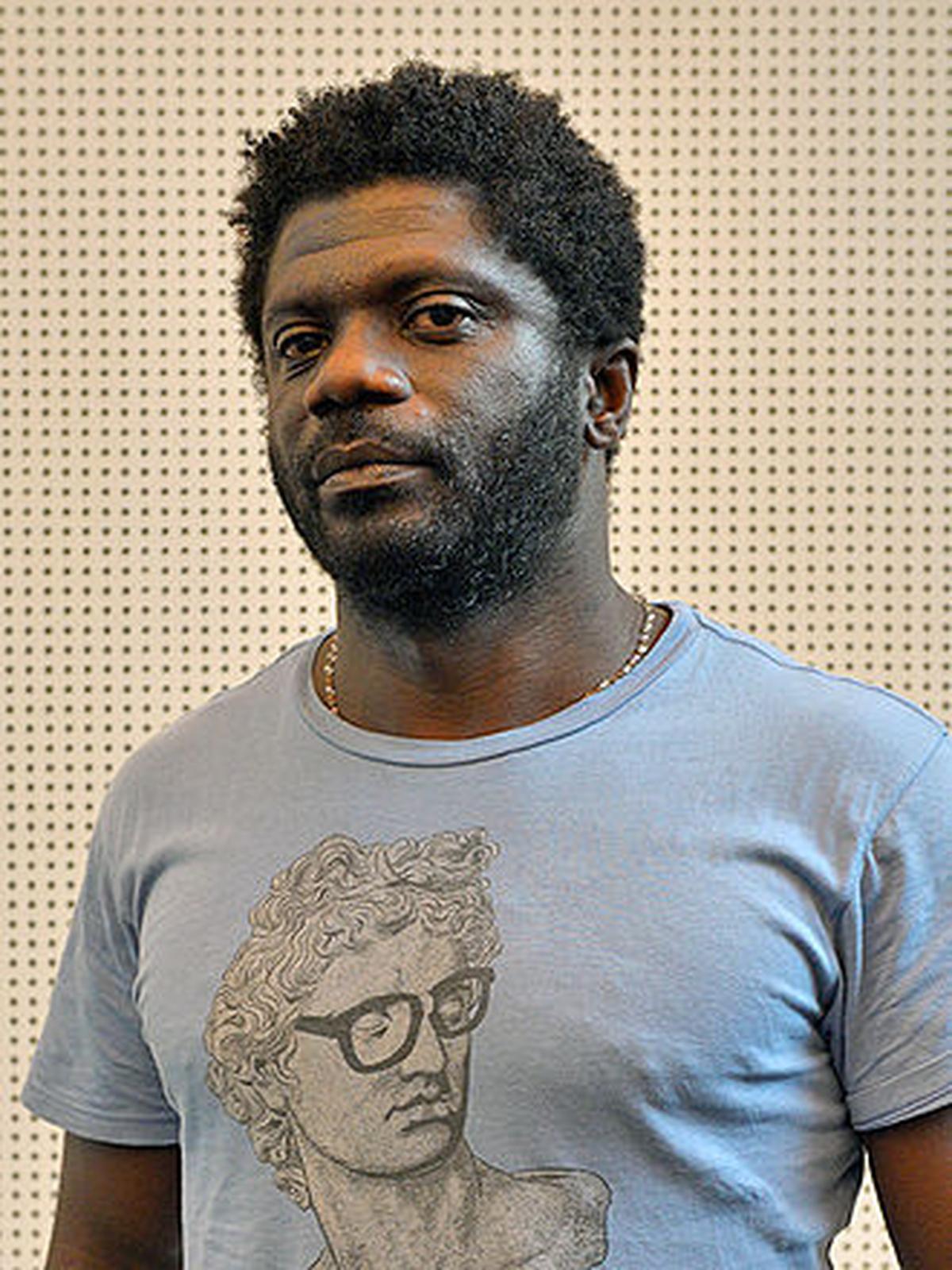
GauZ’
Movement is programmed in our DNA, and nobody can stop this, added GauZ’, who thinks of himself as “a goddammed optimistic guy”. He firmly believes it “will all be alright” and envisions a world where “everyone will be mixed”. If people are racist or xenophobic, that is their problem, he said. “We people have one thing to do, and that is to be.”
Sophie Mackintosh, on the other hand, didn’t sound quite as optimistic. It was during Trump’s first term, when he pandered to his base, that Mackintosh’s ideas around toxic masculinity, a key theme of her début novel, The Water Cure, came into being. “I mostly wrote it in 2016-2017, when there was quite a shift. Donald Trump’s rise to power, the Brexit vote in the U.K. too, and a lot of #metoo stories were being shared,” said the London-based Welsh writer, whose novel, which follows the lives of three sisters inhabiting a sheltered island away from the toxic effect of men, was longlisted for the 2018 Booker Prize. “It felt like there was a lot of shifting and toxicity in the atmosphere,” she told academician and writer Rishikesh K.B. at a session titled ‘Through a Lens, Darkly’. “It made me think about the psychological impact of it… what if toxic masculinity was literally toxic?”
Illiberal lives
The politics of nostalgia, which can be a driver of extremism worldwide, was another theme dissected and decoded at the festival. Most notably at a panel discussion titled ‘Once Upon a Time in the USSR’, which had winners of the International Booker Prize Jenny Erpenbeck (2024) and Georgi Gospodinov (2023) in conversation with German writer Max Czollek and Thiruvananthapuram-based academician and writer Meena T. Pillai.
Erpenbeck, whose novel Kairos (translated by Michael Hofmann) tells the story of a tempestuous relationship between an older man and a younger woman around the time of the fall of the Berlin Wall, talked about the Soviet Union and the core values they espoused. “I talk about the dark side of the system in Kairos,” she said, before discussing the failure of the socialist state, the violence it often unleashed, the layered complexity of truth and the malleability of memory.
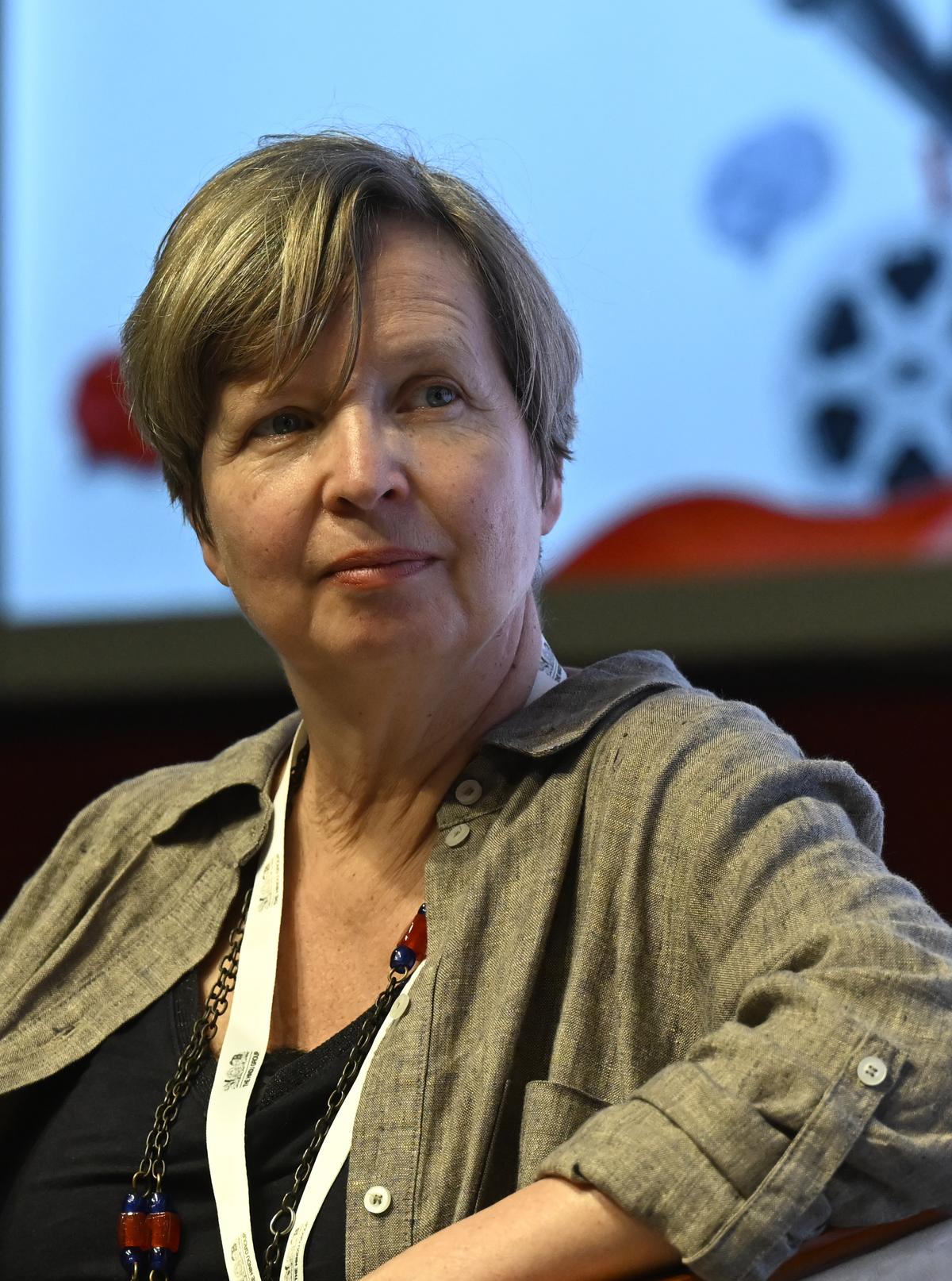
Jenny Erpenbeck
| Photo Credit:
Ragu R.
The culture of memory is also vital to Gospodinov, whose book Time Shelter tells the story of an enigmatic therapist called Gaustine, who runs a “clinic of the past” for people afflicted with Alzheimer’s disease. “The idea that you can bring the past back to the present could be very seductive but also very dangerous,” he said, adding that, as a society, we tend to choose the past when we have a problem with the future. “I think that now is such a moment,” he said, pointing out that populists, in general, are excellent storytellers. “We must be better than them.”
Published – January 31, 2025 12:50 pm IST