

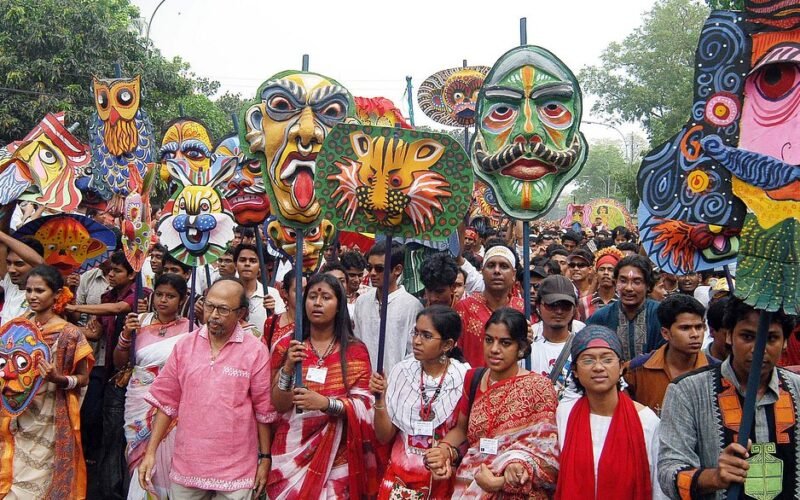
Religion strongly shapes life in West Bengal by influencing what people wear which festivals they celebrate, and how they behave socially. Hindu, Muslim, Christian and tribal traditions all contribute to a culture where religion and everyday life are closely connected yet the state also shows a strong mix of communities and customs.
Clothing
Traditional clothing in West Bengal is often linked to religious and cultural identity. Women commonly wear sarees, including styles like Garad, Tant, Benarasi and Jamdani, especially during weddings, pujas and other sacred occasions. The white-and-red combination worn with Shakha-Pola bangles is especially symbolic in Hindu ceremonies and represents purity and auspiciousness.
Men often wear dhoti, panjabi, kurta, pyjama or lungi during festivals, family rituals and marriages. Among Bengali Muslims, modest clothing such as salwar-kameez, hijab, panjabi and topi is also common, showing how religion shapes dress in a visible way. In cities like Kolkata, western clothing has become popular, but traditional dress still returns during religious events.

Festivals
Festivals in West Bengal are deeply religious and widely celebrated across communities. Durga Puja is the most important festival in the state, centered on worship of Goddess Durga and marked by decorated pandals, idols, lights, and immersion processions. Other major Hindu festivals include Kali Puja, Saraswati Puja, Lakshmi Puja, Jagaddhatri Puja, Dol and Rath Jatra.
Religious diversity also appears in the festival calendar. Muslims observe Eid, Christians celebrate Christmas and local or seasonal tribal festivals add to the state’s cultural variety. These celebrations are not only religious but also social events that bring neighborhoods together, strengthen community identity and encourage shared participation across faiths.

Social life
Religion influences social life in West Bengal through customs, family rituals, marriage practices, food habits and community gatherings. Many social functions are organized around religious calendars, and important life events such as births, weddings and festivals often include prayer, offerings and traditional dress. Religious identity also affects ornament use, family roles and modesty norms in different communities.
At the same time West Bengal is known for cultural blending. Hindu and Islamic traditions have long coexisted, especially in rural areas, creating shared customs and a mixed social atmosphere. In modern urban life, especially in Kolkata, religious boundaries are often softer, and people from different faiths participate in one another’s festivals, showing a strong spirit of coexistence.
Closing
In short, religion in West Bengal is not limited to worship. It shapes dress, festivals, and social behavior in daily life while also allowing space for cultural fusion and modern change.