


She’s known today for her steel-wire saris but Rimzim Dadu started her career with models stomping out in mini dresses and lace-up men’s shoes. That said, she created her own textiles from day one. And while her debut at couture week is only a few years old, everybody agrees that couture is what she has been doing all along.
The contradictions that are Rimzim Dadu have made her one of India’s most interesting designers. As American novelist Susan Sontag wrote, ‘To name something as interesting implies challenging old orders of praise,’ and Dadu is a tiny, unassuming powerhouse whose work, straddling textile innovation, western sensibility, and Indian weaving heritage, has kept me engaged over the years. Hers was also one of the most interesting shows of the recent Hyundai India Couture Week. Titled Oxynn, she started working on it a week after her second daughter was born in February and reveals that she has never felt more vulnerable with a collection because every ensemble felt so personal.
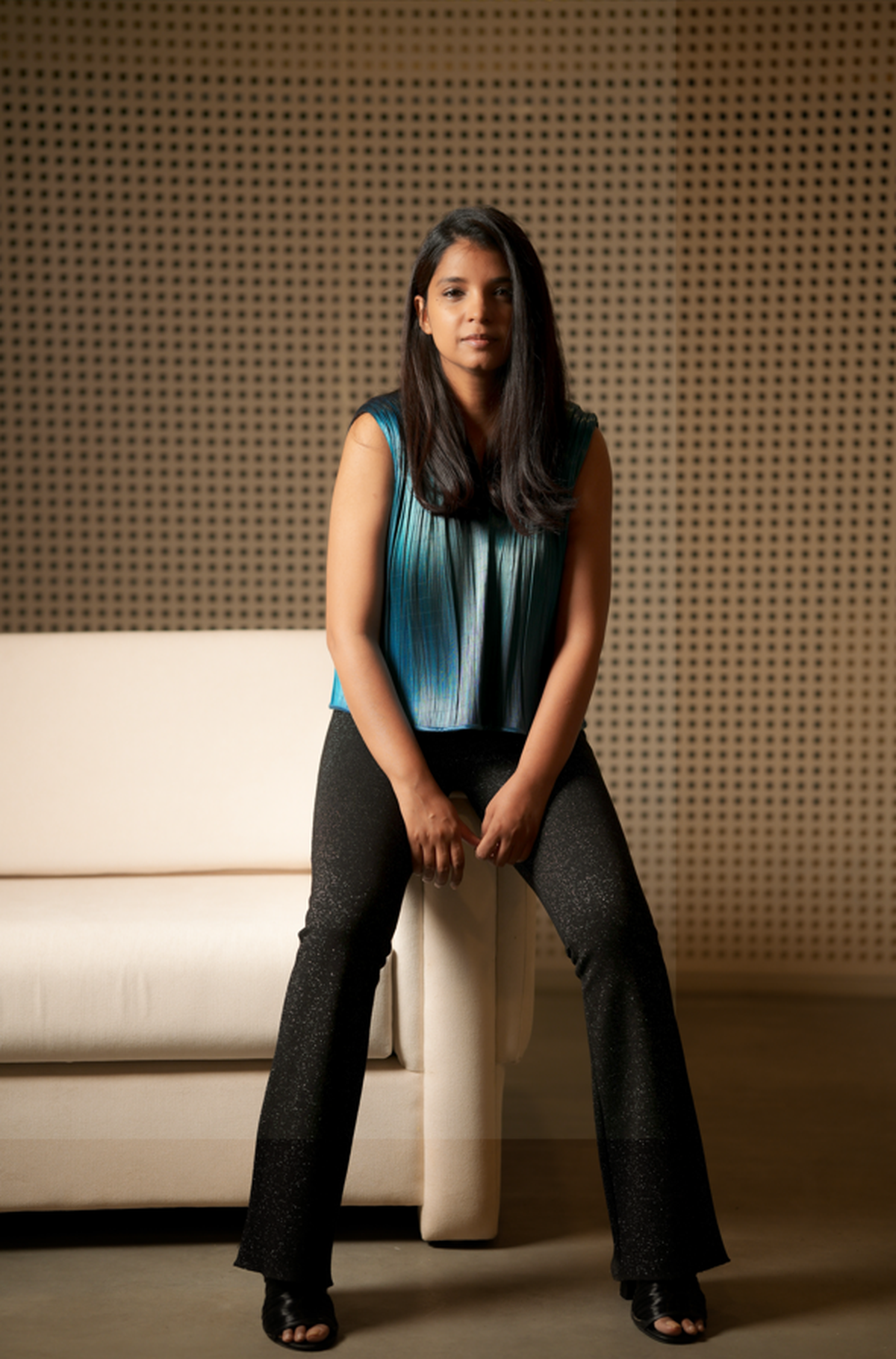
Designer Rimzim Dadu
The collection took her obsession with the patola a step further — with a wool and leather version of the double ikat weave featured at London’s Victoria & Albert Museum in the Fabric of India exhibition in 2015. “The Lambani tribes of Gujarat really stood out for the textiles they wear, their craft and jewellery. It was so rooted and traditional, I thought it would be interesting to reimagine what futuristic versions of tribal weaves and crafts could look like,” says Dadu. In a larger lexicon, the Delhi-based designer’s work is part of the India Modern aesthetic espoused by a handful of designers, including Amit Aggarwal, Gaurav Gupta, Anand Bhushan, Arjun Saluja, and Kallol Dutta.
India Couture Week shows have been dominated by lehengas, embroidery, and cancan in the past decade. Dadu’s reimagining of Banjara tribal work was far from that. Oxidised jewellery, mirror work, and tactile craftsmanship were turned into sculptural corsets, harem pants, and East-meets-West form-fitting lehenga-gown saris. To echo designer Rajesh Pratap Singh (known for his modern minimalist experimentation with traditional techniques, textile innovation, and unbending originality) who has seen Dadu’s work in images, “It looks fantastic.”

Designer Rajesh Pratap Singh
Bridging prêt and couture
Interesting, however, comes with its own baggage. It’s usually shorthand for niche or not in the mainstream. And yet, Dadu has breached that chasm. Over the past few years, her label has become part of the mainstream. What was established with her steel sari, worn by Sonam Kapoor at Cannes in 2016, gathered steam with her menswear line in 2019, and accelerated when her brand turned 15 in 2022, marked by a show at the Kiran Nadar Museum of Art.
Right after, she debuted at India Couture Week in 2023, opened a standalone menswear store in DLF Emporio in Delhi in 2024, and expanded her footprint to Hyderabad in 2025. Multibrand retail is restricted to Pernia’s Pop-Up Shop; she also does footwear and bags, and is planning to go international with an expansion to West Asia. Her celebrity line-up is growing, too, from actors Kareena Kapoor Khan to Janhvi Kapoor, and philanthropist Radhika Merchant Ambani. Ambani’s outing in Dadu’s creation has even sparked that absolute sign of being mainstream — a viral hate reel, more on which later.
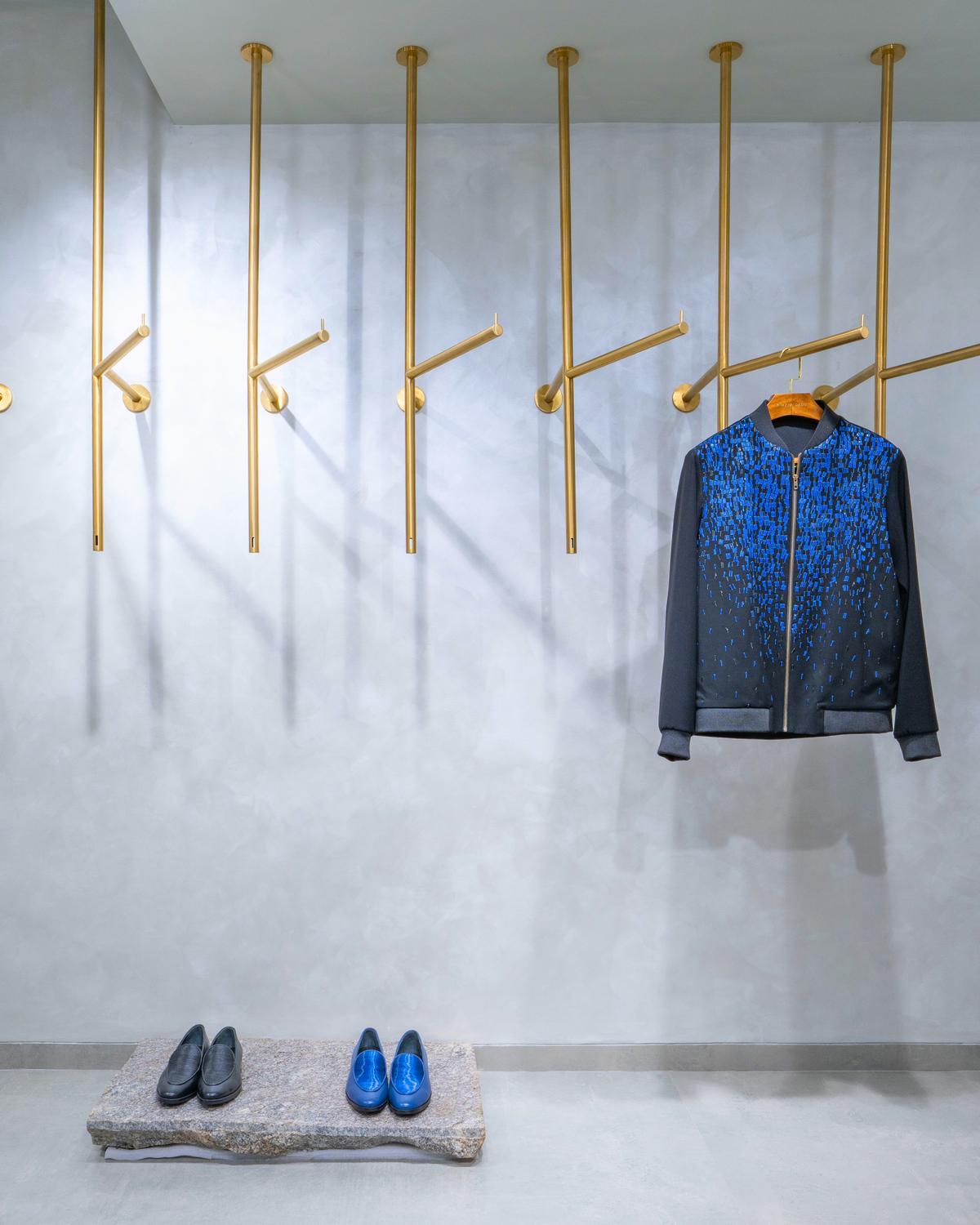
Rimzim Dadu’s Hyderabad store
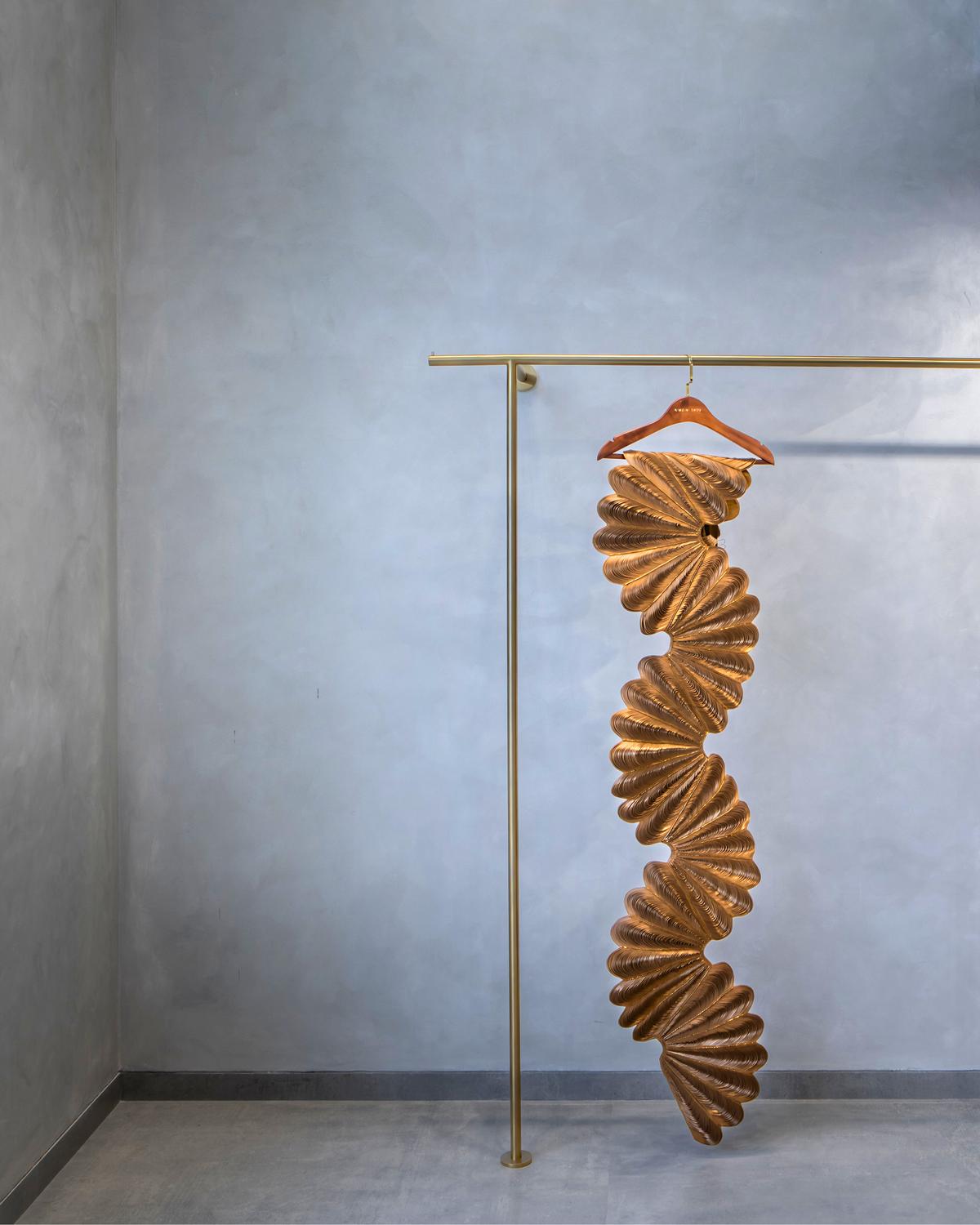
According to Mumbai-based fashion stylist Sohiny Das who has worked on her shows for the past four years, Dadu has managed a difficult task: “Retain what she started with, but also evolve it dramatically, bridge prêt and couture, and be able to do both.” Das points out that Dadu was very texture-based at the beginning, but over the years has realised the importance of shape.
‘I’m really creating for women’
Dadu, 38, now the mother of two girls — Ose, three, and Raga, six months — spent her childhood, from the age of five, at her father’s export house making her own tie-and-dye patterns, watching embroidery being done, and being fascinated by spools of threads and button machines. She started her label, then called My Village, at GenNext, Lakmé Fashion Week 2007, right after graduating from Pearl Academy in Delhi.
Over the years, she has experimented with paper, wool, silicon, chiffon, steel wires, acrylic with textiles, and leather, shredding them to develop cords and weaving those together to achieve a structure that fabric would not allow. None of this is abstract experimentation. “I’m not creating to prove a point or for museums. I’m really creating for women, for people. I actively think of how each piece can fit into their wardrobes, and the functionality of it is very important for me,” she says. Her online prêt ensembles are in the range of ₹1-₹3 lakh.
And yet, the fact that her work is in museums seems natural. Apurva Kackar, director of KNMA’s Institutional Affairs and Outreach, where Dadu’s 15th anniversary show became the first physical showcase of their Art x Fashion series, points out that the designer’s presentation was alongside an Anupam Sud retrospective at the museum and that both challenged the patriarchal space of printmaking and fashion. “Dadu’s work blurs the boundaries between fashion, art, and material innovation, qualities that resonate strongly with our vision for the Art x Fashion series. She has consistently challenged conventional perceptions of textiles and craft, transforming materials into sculptural forms,” says Kackar. “This experimental, thought-provoking approach made her a natural fit for our collaboration.”

Challenging controversies
It’s surprising then that Dadu recently found herself in the eye of an Instagram storm being accused of copying a Tom Ford dress from his 2020 show for Radhika Merchant Ambani. Dadu, who was forwarded the reel by a bunch of people, is fuming. “Fringe dresses have been around for centuries. Tom Ford wasn’t the first to do one. It’s like saying I’ve copied patola. The first time I did fringe was in 2014. It was made with chiffon that had been ripped apart and made into cords. We created fringe dresses, tops, and a sari, before Tom Ford. I don’t think Tom Ford looked at me and copied it.” She adds, “There are bullies everywhere, and everybody who has an Instagram account now is a fashion guru, and we must listen to them.”
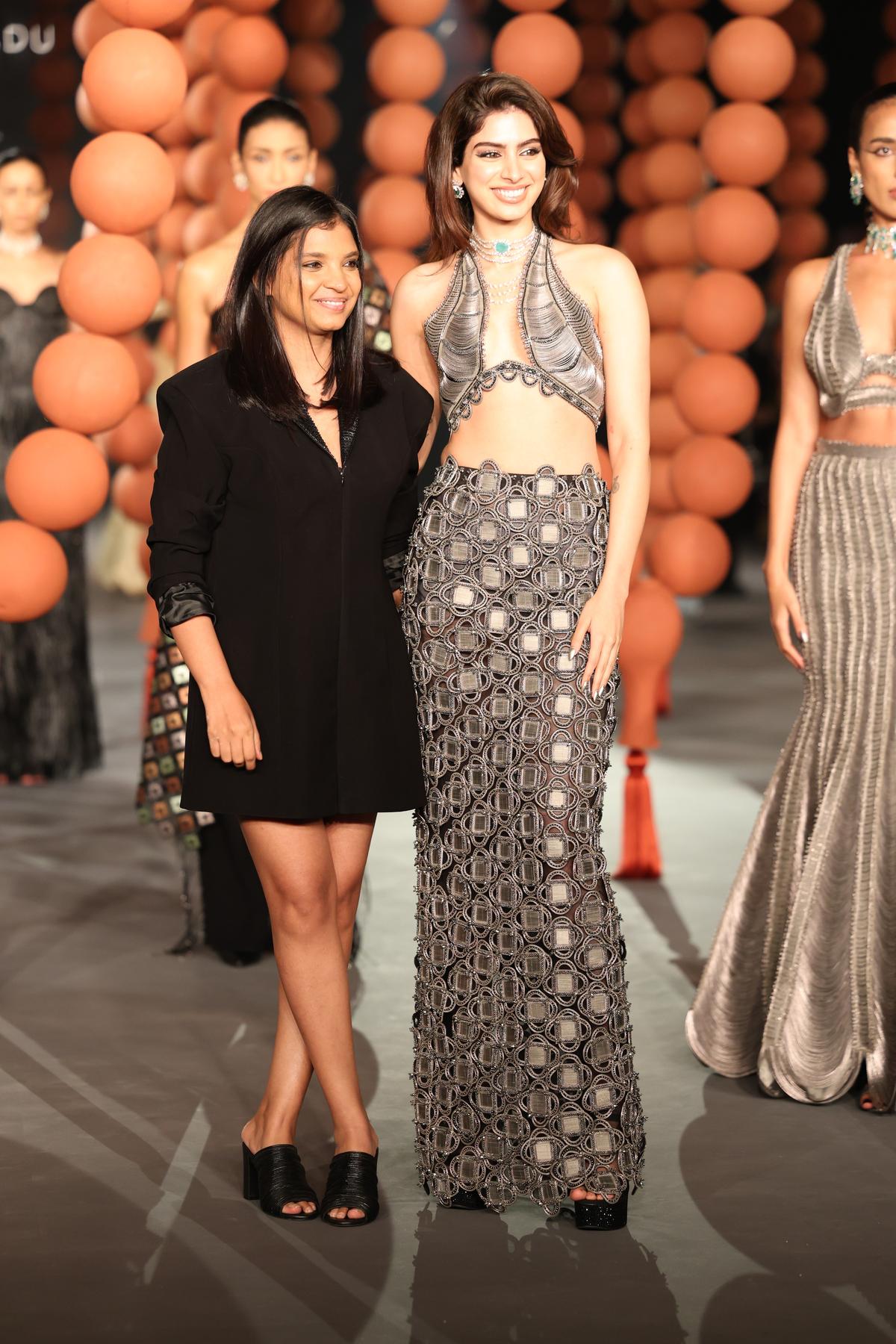
Rimzim Dadu at India Couture Week
Dadu’s annoyance is easy to understand given her years of experimentation. Designer and friend of 20 years, Anand Bhushan, who recalls bonding over design, food, and a shared panic at meeting show deadlines — he has flown with Dadu’s garments from Delhi to Mumbai just in time for her show — believes that what sets her apart is her consistent innovation. “A lot of designers lose that sense of originality, their need to innovate every season, to get seriously excited about their work. I’ve seen Rimzim from the time she was a kid partying every night and going to work in the mornings to becoming a mother of two beautiful daughters and managing a complete business, and innovating… it’s beautiful.”
The author is a photographer and writer.
Published – September 06, 2025 07:17 am IST